
Unlock the Mystery of Glazes: What Happens Inside the Kiln

Ever wondered how a plain coat of glaze transforms into a shiny, colourful surface? It’s not magic - it’s science 🧪! Glazing is one of the most exciting parts of pottery, where chemistry, fire, and creativity collide.
What is Glazing?
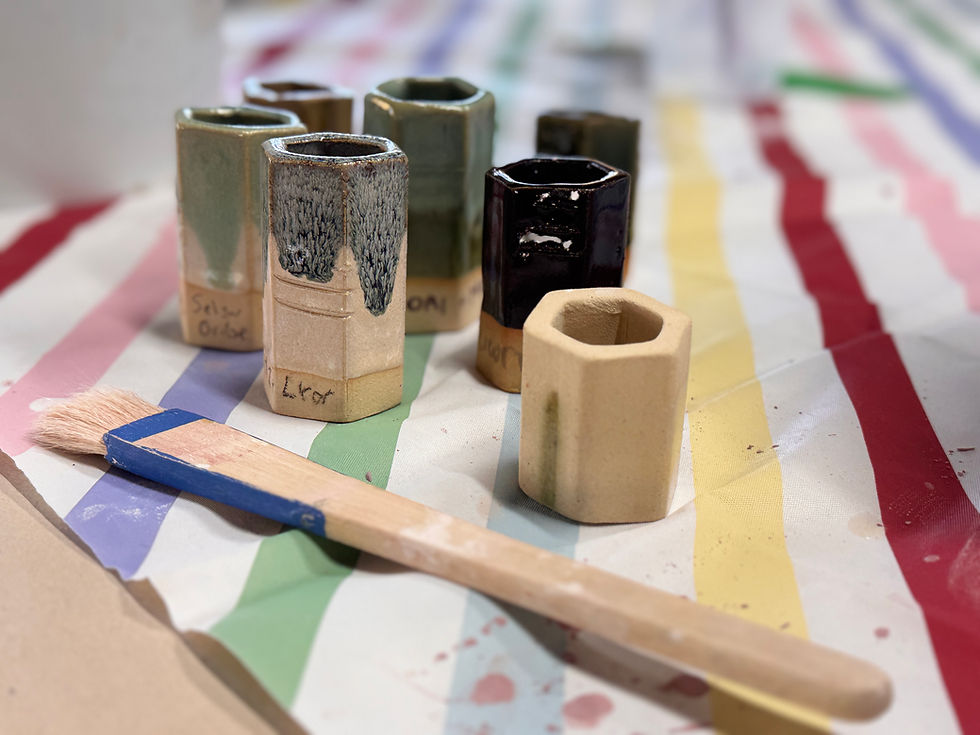
Glaze is a glass-like coating applied to pottery that seals the surface, adds colour, and enhances durability. From glossy whites to deep blues and earthy textures, every glaze has a story to tell. They are made up of a ranges of chemicals, minerals and oxides, in a designed recipe to achieve a specific finish. Whether this always works is another story..... 😝

What Happens in the Kiln?
When your glazed piece goes into the kiln:
It’s fired at extreme temperatures (up to 1300°C!) – The glaze melts and bonds to the clay body.
Colours and textures appear – The heat transforms minerals in the glaze, creating stunning effects.
The result? A one-of-a-kind finish!
The kiln process is where the true magic happens 🪄. And for as much as you can plan, you never know exactly how the glaze will react. This element of surprise is part of the joy of pottery.
Want to Try It Yourself?
Our classes and workshops take you behind the scenes of this transformative process. You’ll learn how to:
Choose and apply different glazes.
Experiment with layering and dipping techniques.
Design and plan colours to suit your unique pottery pieces.
For those ready to dive even deeper, our Advanced Glaze Chemistry Workshop is a must. Explore the alchemy of glaze-making, discover how to mix your own recipes, and test new combinations to create unique finishes. Perfect for experienced potters who want to elevate their practice and demystify the testing process!
Whether you’re just starting your glaze journey or want to master the science behind it, there’s definitely a class for you at The Northern Pottery.
Book your spot in one of our classe or workshops or take it to the next level with our Advanced Glaze Chemistry Workshop, where creativity meets chemistry!

Comments