
A simple guide to glazing with confidence at The Northern Pottery

One of the most exciting moments in the making process is deciding how to glaze a piece. Many beginners think glazing is about choosing a colour from a shelf, a bit like picking a paint swatch. In practice, glazing is far more creative than that. It is about how the glaze moves, how it settles, how it breaks on edges and how different layers interact. Once people understand this, glazing becomes one of the most enjoyable parts of working with clay.
At The Northern Pottery we use a range of studio glazes that we have tested again and again. We know how they behave and how they respond to layering, pouring, dipping and brushing. This gives beginners a huge advantage because it means they can focus on curiosity rather than worry.
The first step is to look at the form you have made. A tall vase invites a different approach to a shallow bowl. A cup with a strong rim will show glaze breaks beautifully. A textured surface will reveal subtle shifts in colour. When we start thinking about the form, we start noticing opportunities rather than limitations.
The next step is to think about movement. Glaze does not stay where you put it. It melts. It flows. It finds low points and gathers in gentle pools. This is where interesting effects appear. A simple dip in one glaze followed by a pour of another can create a soft gradient that feels organic and completely unique. A brushed design over a dipped base can add depth that only reveals itself once the kiln has done its work.
Layering is one of the easiest ways to achieve rich results. Pouring a second glaze over the first creates beautiful interactions that you cannot get from a single colour. Some of our glazes blend into new tones when layered. Others create fine lines or soft transitions that bring a piece to life. When beginners see this for the first time, the excitement is immediate.
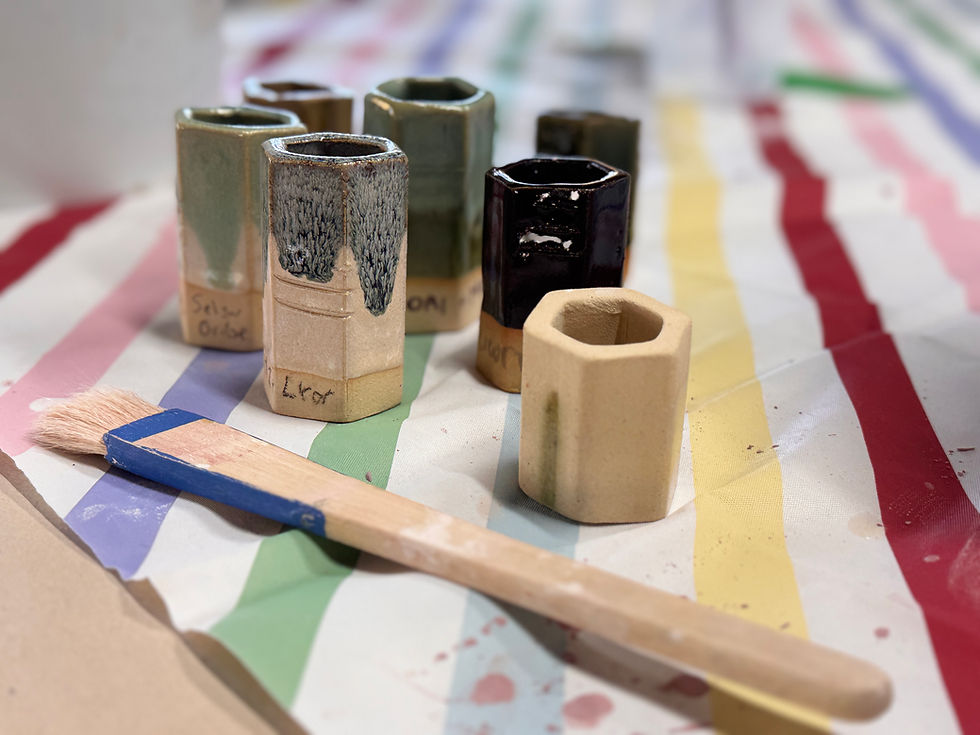
We also love encouraging people to experiment with partial glazing. Leaving a section of raw clay at the base or allowing the top to remain unglazed creates contrast. It allows the form to breathe and gives the piece a lovely sense of balance. Sometimes the most striking pieces come from simple choices.
There is no perfect formula for glazing. There is only exploration. Our goal is to help people understand how glazes behave so they can make decisions with confidence. Once that happens, glazing shifts from a step in the process to a creative moment filled with possibility.
The kiln always adds its own touch. That is part of the joy. Each glazed piece becomes a little story of form, movement and heat, shaped by decisions that encourage surprise as much as control. When that piece comes out of the kiln, glowing on the shelf, the feeling is like opening a gift that you helped create.


Comments